The State Shut Down My Oyster Farm Without Warning. The Scientist Who Signed the Order Came Back Alone at Night
We fought them together.
My attorney filed a lawsuit on behalf of every shellfish farmer on the creek. Lila gave her data to a federal environmental agency, the way the law protects scientists who report violations. I called every contact I still had from twenty years in development, and I made sure every investor in that Atlanta group knew exactly what their liability insurance was about to cost them.
The developer settled in September.
They rebuilt the sewage system. They paid for a marsh restoration project. They paid damages to every oyster farmer on the creek, including me.
The water tested clean for six straight weeks in November. My harvest permit was restored.
Lila drove out to the farm to deliver the notice in person. This time she came in daylight, in uniform.
“You’re open,” she said, handing me the letter.
“Thanks to you.”
“Thanks to us.”
She looked out at the creek, gold in the late afternoon light, with the oyster cages floating in long rows.
“I’ve been thinking about something,” she said. “I’m not your regulator anymore. The case is closed. The permit’s restored.”
“Okay.”
“So if you asked me to stay for oysters at sunset,” she said, “it wouldn’t be a conflict of interest.”
I grinned.
“Stay for oysters at sunset, Dr. Grant.”
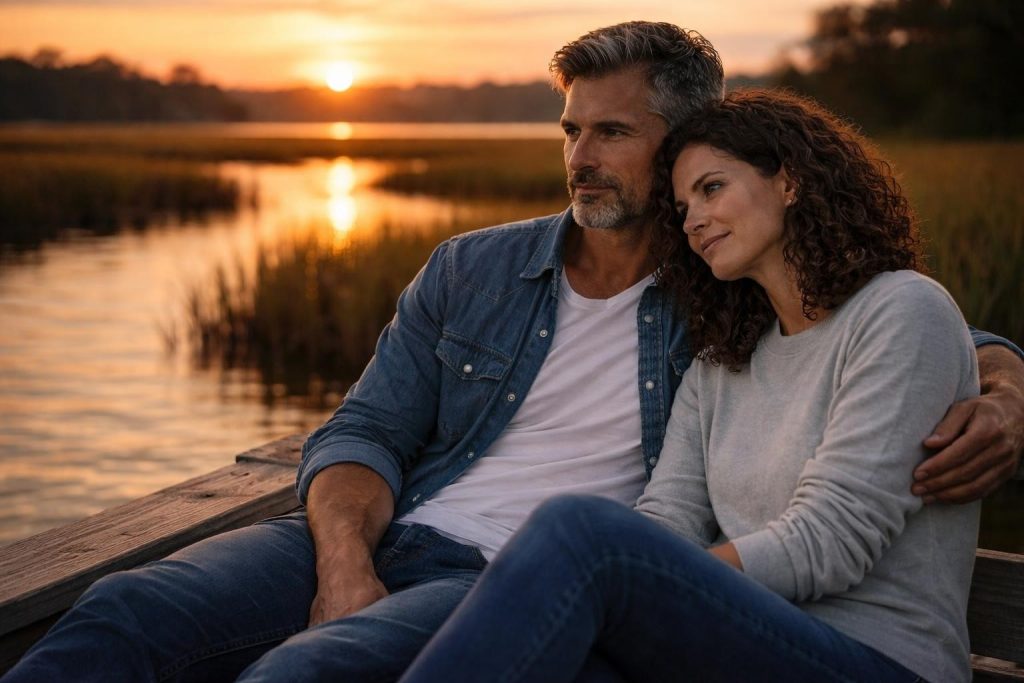
She stayed. We sat at the end of the dock while the sun went down over the marsh and a pod of dolphins rolled through the creek like they’d been invited.
At some point, she leaned her head on my shoulder.
At some point after that, I kissed her.
Lila still works for the state. She tests my water every month. She says she’s extra strict with me to avoid any appearance of favoritism.
My water is the cleanest on the creek.
Would you have risked your job to tell him the truth? Tell me in the comments.